

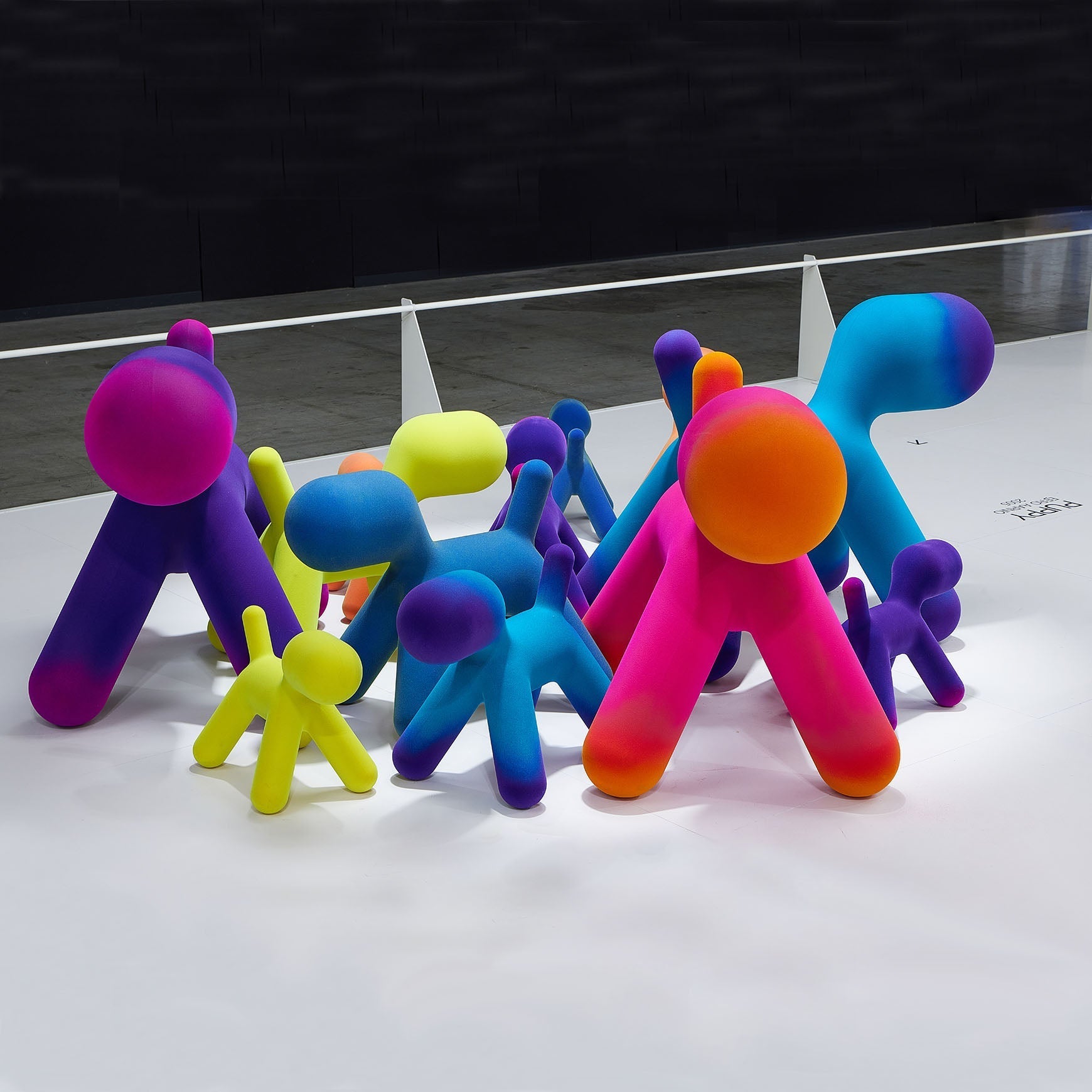
In modern interior design, creating spaces that are both functional and visually clean often requires strict editing. However, minimalist environments do not have to lack character. The abstract canine chair is a perfect example of how an object can bridge the gap between a practical piece of furniture, a children's toy, and a sculptural decor element without disrupting a clean, Nordic-inspired aesthetic.
The Power of Geometric Abstraction

The core strength of this design lies in its pure silhouette. By completely removing realistic details—such as facial features, fur textures, or anatomical joints—the object is reduced to its most basic structural geometry. It is instantly recognizable as a dog, yet its abstraction allows it to function as a piece of modern pop art. This lack of visual clutter is precisely why the shape integrates so effortlessly into minimalist, Bauhaus, or Scandinavian interiors. It provides warmth and playfulness through form rather than applied decoration.
Material Engineering and Durability

Beyond its visual appeal, the object is a study in practical industrial manufacturing. Constructed using rotation-molded polyethylene, the structure is entirely hollow yet highly durable. This single-mold process eliminates seams and weak points, making the chair tough enough to withstand active use as a children’s seat or climbing object. The material is also weather-resistant and easy to sanitize, ensuring the object transitions seamlessly from indoor playrooms to outdoor terraces.
Color as an Architectural Element

While the shape itself is restrained, the object frequently utilizes bold, saturated colors. In a monochromatic or neutral interior space, introducing a vivid, solid-color object acts as a visual anchor. Whether finished in a matte primary color or a contemporary gradient, the chair serves as a deliberate focal point, drawing the eye without requiring complex patterns or textures.
Spatial Integration in the Modern Home

What makes this geometric silhouette highly effective for design enthusiasts is its dual nature. During active use, it is a highly functional piece of children's furniture with a low center of gravity for stability. When not in use, it does not read as discarded clutter. Instead, it reads as a deliberate architectural object resting in the space. It proves that functional items for family homes can maintain rigorous design standards.
Conclusion
The minimalist canine chair demonstrates that effective industrial design can be playful without being visually noisy. By relying on durable materials and pure geometric abstraction, it remains a timeless solution for modern, functional interiors.


Share:
The Design Legacy of the Louis Ghost Chair
Nothing Phone (2a) Special Edition: When Transparency Becomes Design