

The Power of Retro in Contemporary Design

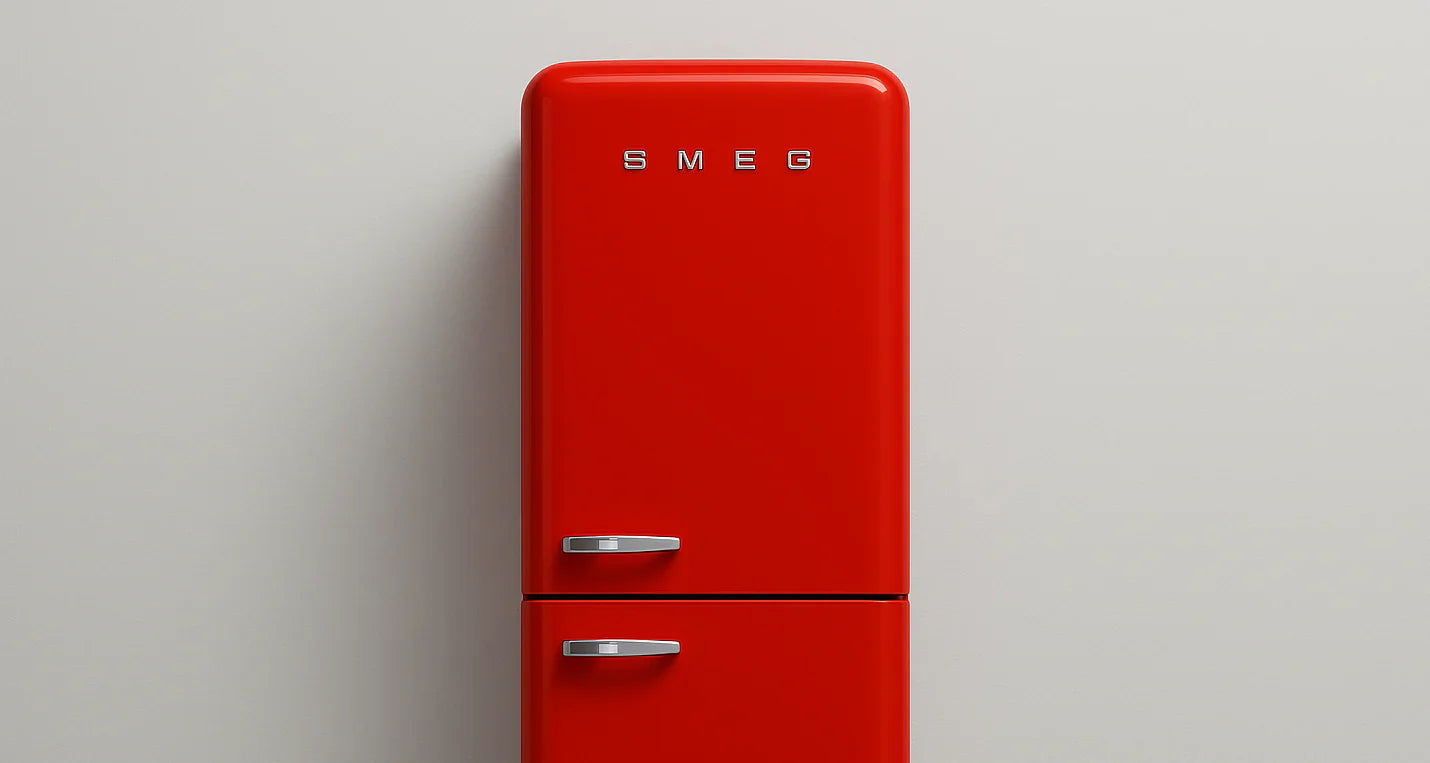
In a world dominated by minimalism and neutral palettes, the SMEG fridge stands as a bold counterstatement — a celebration of color, curves, and nostalgia.
More than just a kitchen appliance, the SMEG refrigerator has become a design object, bridging the gap between mid-century aesthetics and modern functionality. For designers, it represents something rare: a product where emotion, heritage, and industrial design are equally important.
Origins: Italian Craft Meets Industrial Vision
The story of SMEG begins in 1948 in Guastalla, where the company was founded by Vittorio Bertazzoni.
From the beginning, SMEG positioned itself not just as a manufacturer, but as a design-driven brand rooted in Italian craftsmanship. The company name itself — Smalterie Metallurgiche Emiliane Guastalla — reflects its origins in enamel and metalwork.
By the late 20th century, SMEG made a strategic decision that would define its global identity:
instead of competing purely on technology, it would compete on design experience.
The Birth of the FAB Series

The turning point came with the introduction of the FAB series, particularly the iconic FAB28 refrigerator.
Inspired by the 1950s American appliance aesthetic, the design features:
- Soft, rounded edges
- Glossy, enamel-like finishes
- Bold, saturated colors
- Chrome detailing and signature handle
But the brilliance of the FAB series lies in its reinterpretation, not replication.
Rather than copying vintage appliances, SMEG created a modern reinterpretation of retro design — combining nostalgic form with contemporary engineering.
This approach transformed the fridge into something more than functional:
it became a centerpiece of interior design.
Design Philosophy: Emotion Over Minimalism
At a time when brands like Apple were pushing ultra-minimalist aesthetics, SMEG took a different path.
Their philosophy prioritizes:
- Emotional connection
- Visual identity
- Personal expression through objects
The SMEG fridge invites users to interact with design on a sensory level — not just through usability, but through color, texture, and form.
For designers, this reflects a broader movement:
the shift from “invisible design” to “expressive design”.
Collaboration as a Design Strategy

A key factor in SMEG’s success is its use of high-profile design collaborations.
One of the most notable is with Dolce & Gabbana, resulting in hand-painted refrigerators inspired by Sicilian art and culture.
These collaborations transform the fridge into:
- a collectible object
- a functional artwork
- a cultural statement piece
By merging industrial design with fashion and art, SMEG extends its reach beyond kitchens into design culture and luxury markets.
Engineering Behind the Aesthetic
While the exterior celebrates retro aesthetics, the interior of a SMEG fridge is entirely modern:
- Energy-efficient cooling systems
- Advanced temperature control
- Optimized storage layouts
- Quiet operation technology
This duality is crucial.
The success of the SMEG fridge lies in its ability to balance nostalgia with innovation — offering users the best of both worlds.
Why Designers Love SMEG
The SMEG fridge resonates strongly with architects, interior designers, and creatives for several reasons:
1. Iconic Silhouette
The curved form is instantly recognizable, making it a visual anchor in any space.
2. Color as Identity
From pastel blue to vibrant red, SMEG uses color not as decoration, but as core design language.
3. Object as Statement
Unlike most appliances, a SMEG fridge is meant to be seen — even showcased.
4. Timeless Appeal
By referencing the 1950s, the design avoids short-term trends and achieves long-term relevance.
The SMEG Fridge in Modern Interiors

Today, SMEG refrigerators appear in a wide range of interiors:
- Minimalist spaces — as a bold accent
- Vintage-inspired homes — reinforcing retro identity
- Eclectic interiors — adding character and contrast
- Luxury kitchens — as collectible design pieces
Their versatility comes from a simple principle:
strong design adapts without losing identity.
Conclusion: More Than a Refrigerator
The SMEG fridge is not just an appliance — it is a case study in design strategy.
It proves that:
- nostalgia can be modernized
- function can coexist with emotion
- everyday objects can become icons
In an industry often driven by technical specifications, SMEG reminds us of something essential:
Design is not just about how things work — but how they make us feel.


Share:
Eames Lounge Chair: A Chair You Don’t Just Buy — You Grow Into
Bang & Olufsen: When Audio Becomes Art