

A Familiar Object, Reimagined
What if a stool could be more than just something you sit on?
SQOOL is a conceptual design that challenges one of the most basic objects in our daily lives. Instead of refining the traditional four-leg structure, it asks a more radical question:
What happens when you add one more?
The result is a stool with six legs—a form that feels playful, unexpected, and surprisingly logical.
Designed by Bored Eye (Liam de la Bedoyere)

The Core Idea: Six Legs, One New Possibility
At first glance, SQOOL appears almost creature-like, with a silhouette reminiscent of a squid or an abstract character.
But behind this playful aesthetic lies a clear design logic:
- Four legs → stability
- Fifth leg → structural balance and visual rhythm
- Sixth leg → freedom
This sixth element is where the project comes alive.
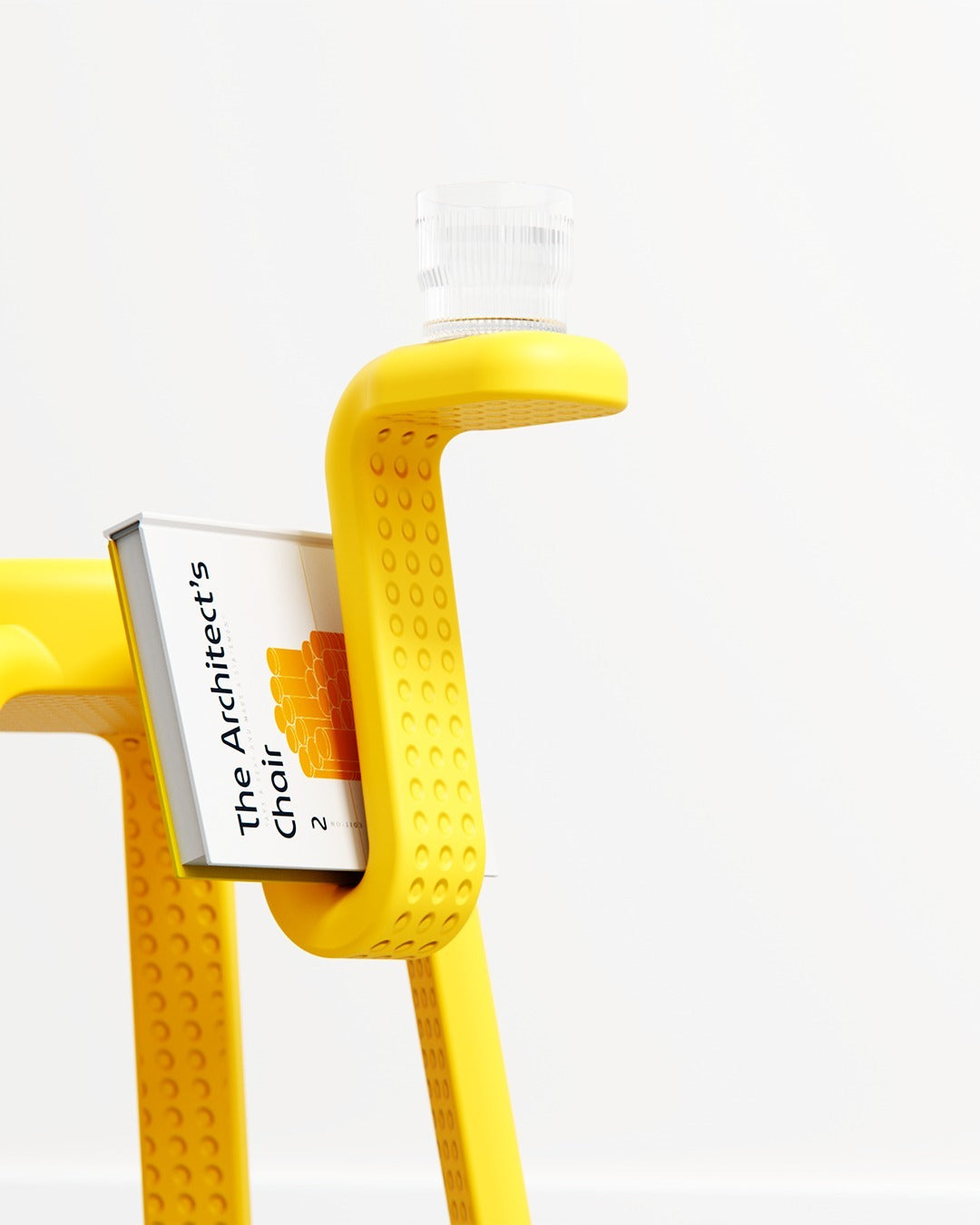
It is not just a leg—it becomes:
- A handle for easy movement
- A hook for bags or objects
- A support for books or devices
This transforms the stool from a passive object into something interactive and responsive.
Design That Invites Interaction
Most stools are neutral—they do their job and disappear into the background.
SQOOL does the opposite.
It invites users to engage with it:
- Pick it up differently
- Use it beyond sitting
- Discover new functions naturally
This aligns with a growing trend in design:
objects that encourage behavior, not just serve function

Playfulness Meets Practicality
Despite its experimental appearance, SQOOL is grounded in real-world usability.
✔ Stability
Six legs create a highly stable base, distributing weight evenly.
✔ Stackability
The legs are carefully shaped to allow clean vertical stacking, making it suitable for:
- Cafés
- Studios
- Flexible workspaces
✔ Portability
The integrated “extra leg” acts as a natural grip.
The design proves that playfulness doesn’t have to sacrifice function.
A Sculptural Yet Functional Form
Visually, SQOOL sits somewhere between:
- Furniture
- Sculpture
- Character design
Its organic geometry gives it personality, while its clean execution keeps it minimal.
It feels like:
- A design object you want to display
- But also something you can use every day
The Philosophy Behind SQOOL
SQOOL reflects a broader idea in contemporary design:
Reinvent the familiar, don’t just improve it.
Instead of optimizing the traditional stool, the project:
- Questions its structure
- Expands its function
- Adds emotional value
This approach is similar to iconic designs where:
- One change → transforms everything
- A simple idea → creates a new category

Why This Concept Works
✔ Instantly Memorable
The six-leg structure creates a strong, recognizable identity.
✔ Functional Surprise
Users discover new uses organically.
✔ Emotional Design
It feels playful and approachable.
✔ System Thinking
Stackability makes it viable for real environments.
SQOOL in Modern Spaces
This type of design fits perfectly into:
- Creative studios
- Modern cafés
- Design-focused interiors
- Flexible public environments
It works especially well in spaces that value:
- Interaction
- Movement
- Informality
Lessons for Designers
SQOOL offers several key insights:
1. Small Changes Can Be Radical
Adding one element can redefine an entire object.
2. Function Can Be Expanded
Products don’t have to serve just one purpose.
3. Personality Matters
Objects people remember are the ones with character.
4. Playfulness Is Powerful
Emotion is as important as usability.
Conclusion: A Stool That Thinks Beyond Sitting
SQOOL is more than a stool—it’s a design statement about possibility.
By adding just one extra leg, it transforms:
- Structure → into interaction
- Function → into experience
- Object → into idea
Ultimately, SQOOL shows that even the simplest objects can be reimagined—if you’re willing to question their most basic assumptions.



Share:
Vitra Panton Chair: One Shape, Infinite Expression
Flos Arco Lamp: Architecture Transformed into Light