

The Power of Less
In a world filled with increasingly complex technology, the Braun ET66 calculator stands as a reminder that simplicity can be revolutionary.
Designed by Dieter Rams, this small, unassuming object became one of the most influential products in modern design history. It didn’t rely on flashy features or bold shapes. Instead, it introduced a philosophy that would later shape global tech design:
“Less, but better.”
The Origin: Design as a System
The ET66 calculator was developed in the 1980s as part of Braun’s broader design language under Dieter Rams.
At Braun, design was never about individual products—it was about creating a coherent system where every object:
-
Looked consistent
-
Felt intuitive
-
Served a clear purpose
The ET66 perfectly embodies this approach. It wasn’t trying to stand out—it was designed to fit perfectly into everyday life.

The Design Language: Pure Clarity
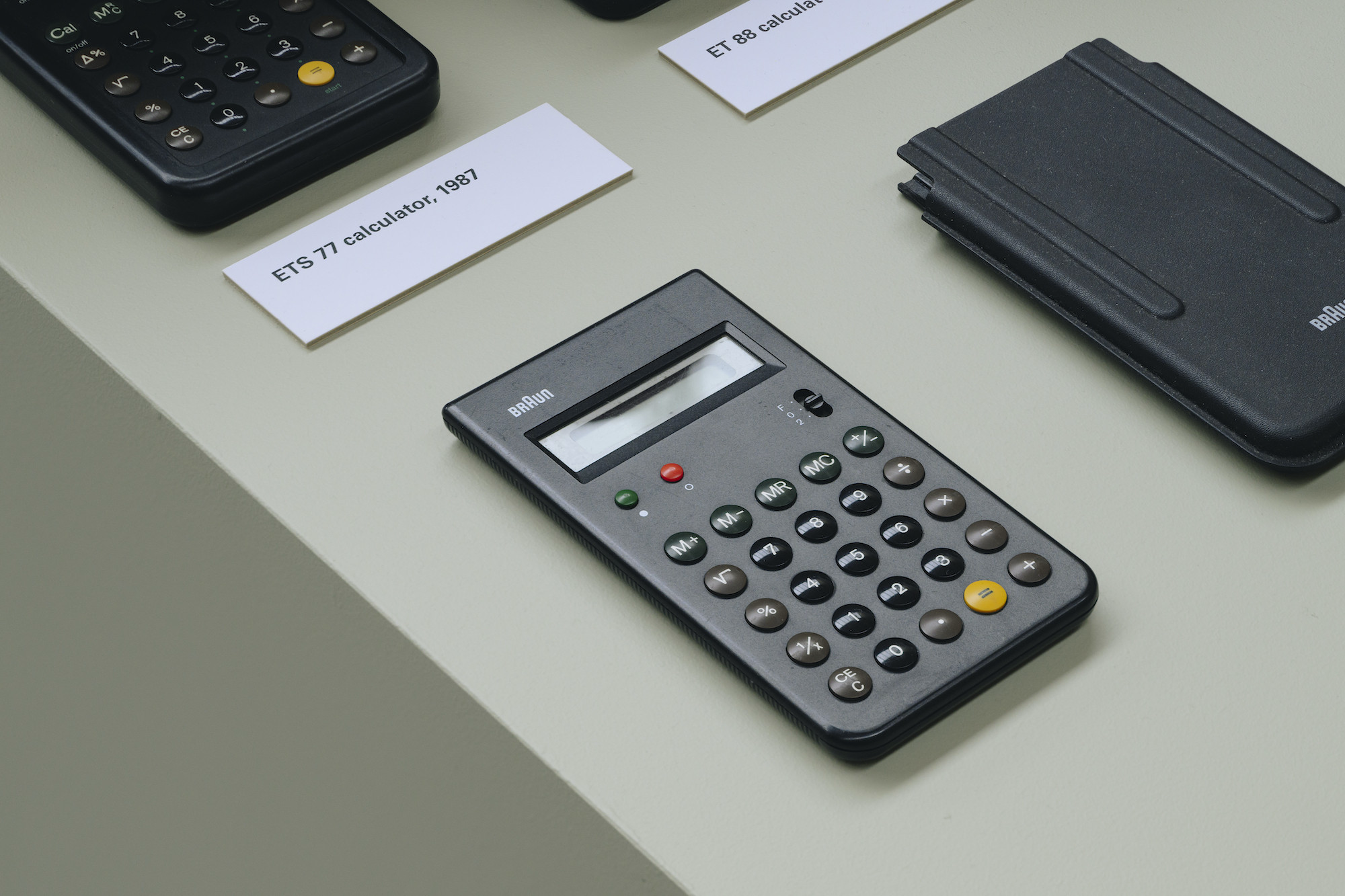
At first glance, the Braun ET66 may seem extremely simple. But every detail is intentional.
Key Design Elements:
-
Grid-based layout → perfectly aligned buttons
-
Neutral color palette → mostly grey with subtle accents
-
Color-coded buttons → intuitive function recognition
-
Rounded edges → soft, approachable feel
There is no decoration, no unnecessary styling—only clarity.
This is minimalism in its purest form:
nothing added, nothing wasted.
Function First—But Beautifully Executed
Unlike products like Juicy Salif, where design overtakes function, the ET66 does the opposite:
-
It is highly functional
-
Extremely easy to use
-
Instantly understandable
But here’s the key difference:
The functionality is expressed visually.
You don’t need instructions to use it. The design itself teaches you how.
This is what separates good design from great design.

The Apple Connection: A Design Legacy
One of the most fascinating aspects of the Braun ET66 is its influence on Apple.
If you compare the ET66 with early iPhone calculator interfaces, the similarities are striking:
-
Grid layout
-
Button proportions
-
Color hierarchy
-
Visual simplicity
Designers at Apple, heavily influenced by Dieter Rams’ philosophy, translated these ideas into digital form.
The ET66 became a blueprint for modern UI design.
A Personal Perspective: When Technology Felt Like the Future
For many people, the Braun ET66 is a design icon. But for some, it’s something more personal.
I still remember when it first came out. As a young boy, I saved up and bought one for myself. At that time, owning a device like this didn’t feel ordinary—it felt like holding a piece of the future.
Back then, a calculator like the ET66 wasn’t just a tool for simple math. It felt almost like having a miniature computer in your hands—something intelligent, precise, and surprisingly powerful.
In a way, it created the same kind of excitement we feel today about artificial intelligence and advanced technology.
It wasn’t just about calculating numbers.
It was about experiencing technology for the first time as something personal and inspiring.
That emotional connection is part of what makes the ET66 so special even today. It’s not only a perfectly designed object—it’s a reminder of a moment when technology still felt magical.

“Less, but Better”: A Philosophy That Changed Everything
Dieter Rams’ famous principle—“Weniger, aber besser” (Less, but better)—is not just a slogan. It’s a design framework.
Applied to the ET66, it means:
-
Remove anything unnecessary
-
Focus on usability
-
Prioritize clarity over decoration
-
Create longevity through simplicity
This philosophy has influenced:
-
Industrial design
-
Digital interfaces
-
Product development worldwide
Why the ET66 Is Still Relevant Today
Decades after its release, the Braun ET66 remains a design reference point.
✔ Timeless Aesthetic
It doesn’t look outdated because it avoids trends.
✔ Universal Usability
Anyone can understand it instantly.
✔ Design Consistency
It fits into both analog and digital worlds.
✔ Cultural Influence
It shaped how modern products are designed—from calculators to smartphones.
Minimalism as Identity
What makes the ET66 special is that minimalism is not just a style—it’s the core identity of the product.
It communicates:
-
Precision
-
Rational thinking
-
Calmness
-
Control
In contrast to loud, expressive designs, the ET66 represents a quieter kind of confidence.
It doesn’t try to impress—it simply works perfectly.

Lessons for Designers and Brands
The Braun ET66 offers essential lessons for anyone creating products today:
1. Simplicity Is Harder Than Complexity
Removing elements requires more discipline than adding them.
2. Design Should Be Self-Explanatory
Users shouldn’t need instructions.
3. Consistency Builds Trust
A clear visual system makes products feel reliable.
4. Longevity Beats Trends
Timeless design outlasts fashionable design.
The ET66 in Modern Context
Today, the ET66 is often:
-
Collected as a design object
-
Displayed in minimalist interiors
-
Studied in design schools
-
Compared to modern UI systems
It exists not just as a tool, but as a benchmark of good design.
Conclusion: A Small Object with Massive Impact
The Braun ET66 calculator proves that even the simplest objects can shape the future.
It is:
-
A tool
-
A philosophy
-
A design standard
Ultimately, the ET66 shows that great design isn’t about adding more—it’s about refining until nothing else is needed.


Share:
Marshall Speakers: Iconic Sound Meets Timeless Design
USM Haller: Modular Furniture That Works Like LEGO for Adults