

More Than Just a Speaker
In today’s world of minimal, anonymous tech products, most speakers are designed to disappear into the background. But Marshall speakers do the opposite—they demand to be seen.
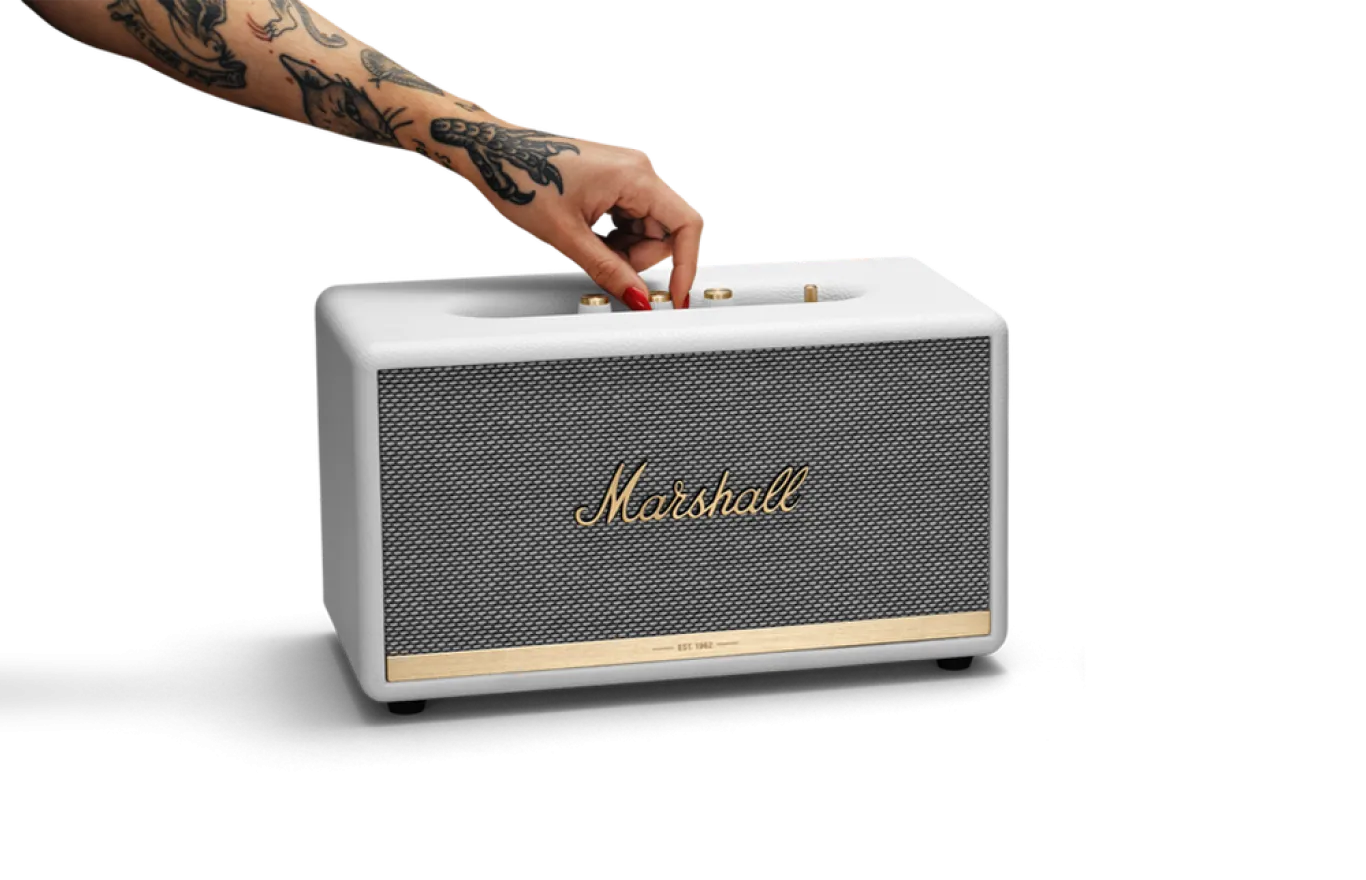
With their unmistakable black, gold accents, and textured surfaces, Marshall speakers look less like electronics and more like objects of identity.
They are not just about sound.
They are about culture, music, and visual presence.
The Origin: From Stage to Living Room
Marshall’s design language comes directly from its heritage in guitar amplifiers, used by legendary musicians for decades.
The brand didn’t invent a new look for its speakers. Instead, it did something smarter:
-
Took an already iconic design (amps)
-
Scaled it down into consumer products
-
Preserved every recognizable detail
This includes:
-
Knurled control knobs
-
Gold control panels
-
Leather-like textured casing
-
Script logo
The result is a product that carries authentic history, not just styling.

Design That Speaks Before Sound
One of the key reasons Marshall speakers stand out is that you recognize them instantly—even before hearing them.
1. Visual Identity
The combination of black and gold has become synonymous with the brand.
2. Material Language
The textured vinyl surface mimics real amplifier cabinets, adding a tactile, almost nostalgic feel.
3. Proportions and Form
Boxy, compact shapes reinforce the idea of miniature amplifiers.
This creates a rare effect:
The product communicates its purpose and heritage visually.

Why This Design Works So Well
Marshall speakers succeed because they align design, emotion, and function.
✔ Familiar Yet Unique
Even if you’ve never owned one, the design feels recognizable.
✔ Emotional Connection
It taps into music culture—rock, live performance, analog sound.
✔ Authenticity
Unlike many brands, Marshall doesn’t imitate—it translates its own legacy.
✔ Consistency
From small portable speakers to larger home systems, the design language remains unified.
From Audio Device to Interior Object
One of the most important shifts Marshall achieved is transforming speakers into interior design elements.
Instead of hiding them, users:
-
Place them on shelves as focal points
-
Integrate them into living room aesthetics
-
Use them as part of a styled environment
The speaker becomes:
-
A decor object
-
A lifestyle symbol
-
A reflection of taste
This is a major evolution—from utility → identity.

The Power of Brand Aesthetics
Marshall proves that strong design isn’t about complexity—it’s about consistency and clarity.
Their visual DNA is simple:
-
Black base
-
Gold details
-
Vintage typography
-
Textured surfaces
But repeated across products, it becomes instantly iconic.
This is what many brands miss:
You don’t need many ideas—just one strong idea, executed perfectly.
Sound + Style: A Dual Experience
While Marshall speakers are known for solid audio performance, their real strength lies in combining:
-
Acoustic experience
-
Visual presence
Users don’t just hear the product—they experience it physically and visually.
This dual-layer design approach makes the product more memorable and desirable.

Cultural Impact: Music as Identity
Marshall’s design is deeply rooted in music culture.
Owning a Marshall speaker subtly communicates:
-
Appreciation for music
-
Connection to rock heritage
-
Preference for analog-inspired aesthetics
It’s similar to wearing a band t-shirt or owning a vinyl player—
it signals who you are, not just what you use.
Lessons for Modern Brands
Marshall offers powerful insights for anyone building products today:
1. Leverage Your Heritage
Authenticity is stronger than trends.
2. Design for Recognition
A product should be identifiable in seconds.
3. Think Beyond Function
People buy how things feel—not just what they do.
4. Make Products Display-Worthy
If users want to show it, you’ve won.
Marshall in Modern Interiors
Today, Marshall speakers are commonly found in:
-
Minimalist apartments (as contrast pieces)
-
Industrial-style interiors
-
Creative studios
-
Lifestyle-focused spaces
They work especially well in interiors that blend modern and vintage elements.
Conclusion: When Sound Becomes a Statement
Marshall speakers are a perfect example of how a product can transcend its category.
They are:
-
Not just speakers
-
Not just design objects
-
But cultural artifacts of sound and style
Ultimately, Marshall proves that great design doesn’t just support a product—it defines how we experience it.




Share:
Juicy Salif by Philippe Starck: Iconic Design Beyond Function
Braun ET66 Calculator: Minimalism as the Ultimate Standard