

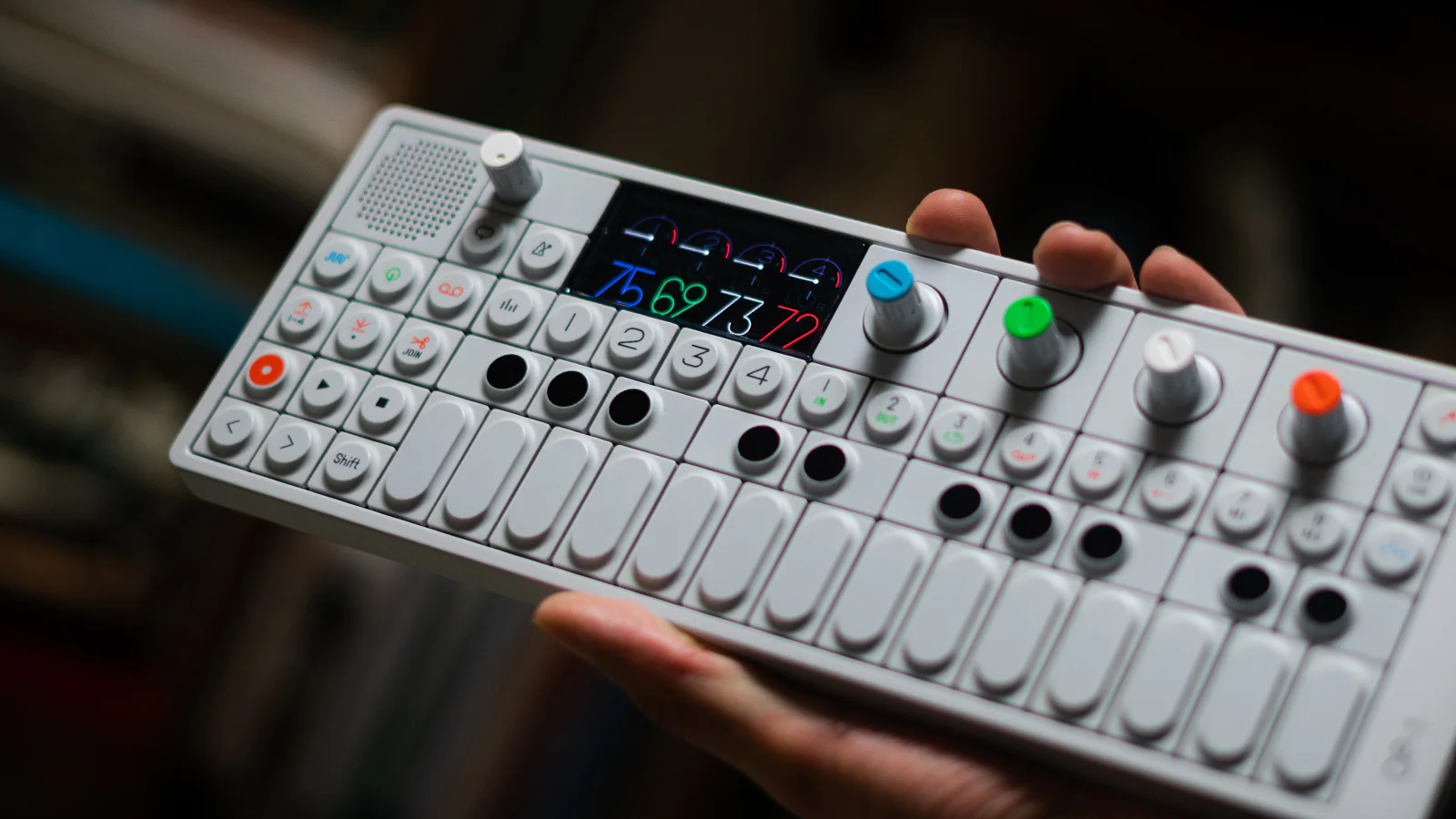
For modern music creators, the tools of the trade often look identical: complex software screens, endless digital menus, and bulky plastic hardware. However, a pioneering design studio from Stockholm has built a dedicated following by taking a completely different approach. By applying principles of Scandinavian minimalism and objective industrial design, they have transformed electronic instruments into highly intuitive, tactile tools.
Here is a look at how this hardware ecosystem inspires a more physical, direct approach to music production.
The Synthesis of Form and Function

The cornerstone of their approach is a compact, all-in-one portable synthesizer. Instead of overwhelming the user with deep, nested menus, the device utilizes a highly efficient color-coded interface. Every physical knob directly corresponds to a parameter on the screen, creating a precise 1:1 relationship between mechanical touch and audio output. This design choice removes technical friction, allowing musicians to focus entirely on composition and sound shaping. The streamlined layout draws heavily from functionalist principles: providing exactly what is needed for production without unnecessary visual clutter.
A Complete Studio in a Minimalist Footprint

This design philosophy extends beyond standalone devices into a fully integrated, mobile audio ecosystem. Designed to pair with their synthesizers is an ultra-compact field mixer. Machined from aluminum, this multi-channel mixer provides professional-grade audio routing, equalization, and effects in a form factor barely larger than a smartphone. For the modern enthusiast, this means the ability to record, mix, and perform in any environment without sacrificing audio quality or dealing with the constraints of traditional, heavy studio equipment.
Rhythm and Sampling Reimagined

For rhythm production, the studio's line of sampler composers adopts an aesthetic reminiscent of retro calculators and classic precision electronics. These layering machines are engineered for speed and immediate physical control. Featuring mechanical keys, punch-in effects, and a built-in microphone, the hardware turns the process of beatmaking into a tactile performance rather than a point-and-click exercise. Whether layering dub tracks or sequencing complex drum breaks, the clear visual layout ensures the user remains in the flow of creation.
Organic Audio Interfaces

Perhaps the most unconventional example of their design ethos is their series of wooden acoustic figures. Crafted from solid wood, these interactive speaker units operate as an automated vocal ensemble. They can be programmed via MIDI or sing pre-arranged compositions. It is a striking demonstration of how modern electronic audio technology can be integrated into warm, organic materials, bridging the gap between a functional speaker module and minimalist home decor.
Conclusion
By prioritizing clean industrial design, immediate visual feedback, and tactile mechanics, this collective proves that powerful musical tools do not need to be overly complicated. Their hardware encourages enthusiasts to step away from the computer screen and interact with sound as a physical, real-world medium.





Share:
LEGO Brick Clog: The Bold Crocs Collaboration Redefining Design
The Design Legacy of the Louis Ghost Chair