

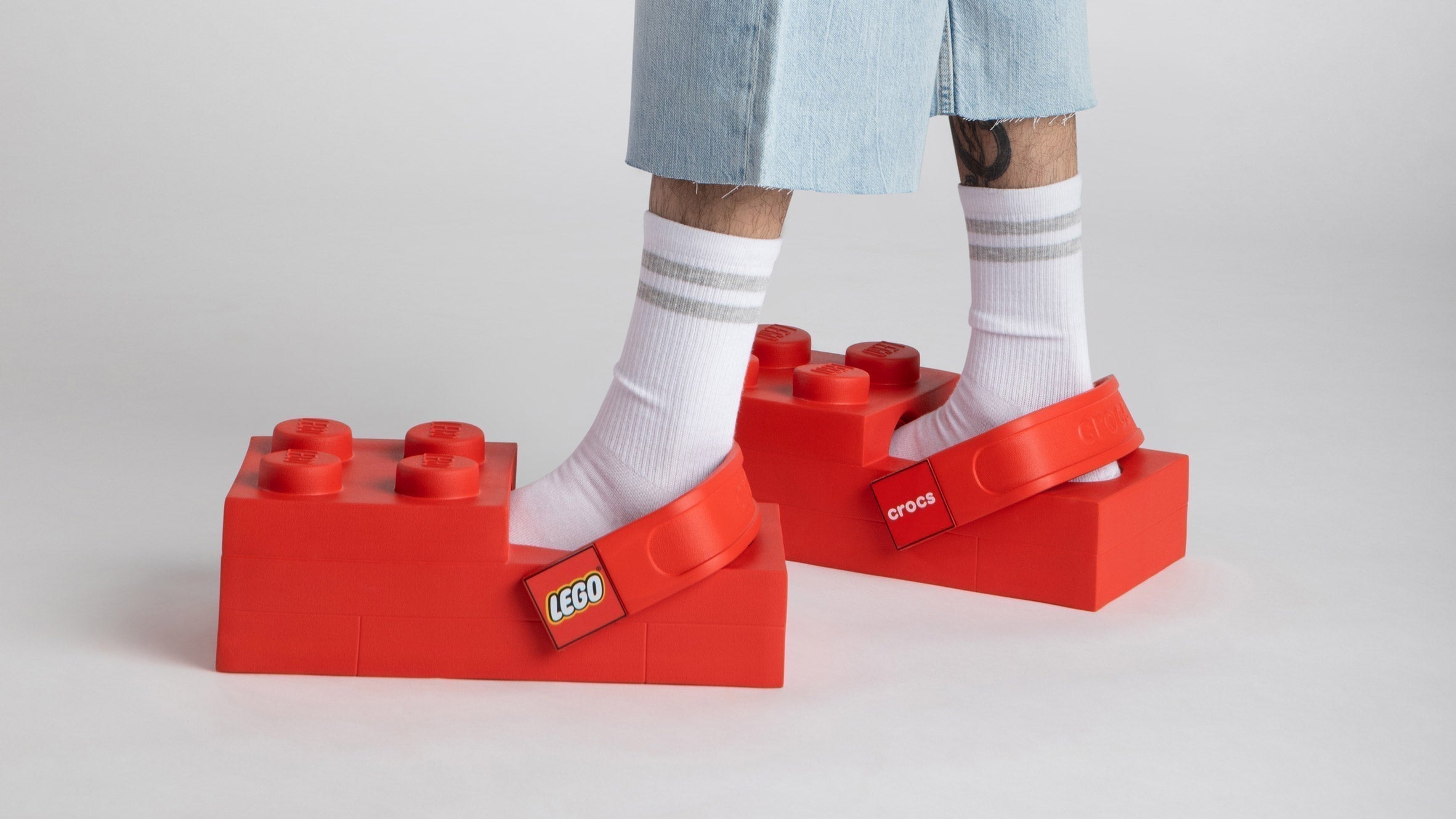
In 2026, an unexpected collaboration between two global icons — LEGO and Crocs — produced one of the most unusual footwear designs of the decade: the LEGO Brick Clog.
At first glance, the idea seems almost absurd: a shoe that literally looks like a giant LEGO brick. But behind this playful concept lies a fascinating case study in product design, cultural branding, and experiential fashion. For designers, it raises an important question:
What happens when the logic of toy design is translated into wearable objects?
The Concept: Translating a Toy into Footwear
The LEGO Brick Clog is the first product released as part of a multi-year partnership between LEGO and Crocs, aiming to celebrate creativity, playfulness, and personal expression.
Rather than simply printing LEGO graphics on a standard shoe, the designers chose a more radical approach: transform the shoe itself into a LEGO brick.
The result is a bold red clog with a rectangular silhouette and four oversized studs on the upper — each stamped with the LEGO logo.
Key design features include:
-
Four raised LEGO studs integrated into the upper
-
Brick-inspired outsole referencing the interlocking geometry of LEGO pieces
-
Crocs’ signature Croslite foam construction for lightweight comfort
-
A pivoting heel strap typical of classic Crocs clogs
-
A collectible LEGO Minifigure included in the box
The shoe launched globally in February 2026, with retail prices reported around $149–$199 depending on market.

A Design Language Built on Play
Both LEGO and Crocs share a design philosophy rooted in customization and user creativity.
-
LEGO bricks are modular building units.
-
Crocs clogs are intentionally simple forms designed to be personalized with Jibbitz charms.
According to the LEGO Group, the collaboration is meant to celebrate “bold and unapologetic creativity”, inviting fans to express themselves through playful design.
From a design perspective, the Brick Clog operates almost like a sculptural object rather than traditional footwear. Its exaggerated geometry breaks conventional ergonomic aesthetics in favor of visual storytelling.
It transforms a childhood icon into something wearable — turning nostalgia into fashion.

From Toy Culture to Fashion Runways
The shoe first gained attention during Paris Fashion Week, where it appeared as part of a viral fashion moment that blurred the boundary between pop culture and couture.
While many fashion collaborations rely on subtle branding, the LEGO Brick Clog goes in the opposite direction. It embraces visual exaggeration, making the design unmistakable even from a distance.
This strategy aligns with a broader movement in fashion known as “object design footwear” — where shoes become playful, meme-worthy artifacts rather than purely functional garments.
Examples include:
-
oversized sneakers
-
sculptural heels
-
novelty footwear that deliberately challenges expectations
The LEGO Brick Clog fits perfectly into this cultural moment.
The Viral Reaction: Humor Meets Design
The internet’s response was immediate and polarized.
Many people initially thought the shoe announcement was a joke — something that looked more like an April Fools’ product than a serious release.
On online forums and communities, reactions ranged from admiration to disbelief:
“I thought it was a render… someone taking the piss out of LEGO.” — Reddit user reaction
Others embraced the design precisely because of its absurdity.
In modern product design, virality itself has become part of the value proposition. The LEGO Brick Clog is less about everyday practicality and more about conversation, identity, and cultural visibility.

Design Analysis: Why This Shoe Works
Despite its unconventional appearance, the LEGO Brick Clog succeeds for several design reasons.
1. Radical recognizability
Few shapes in the world are as universally recognizable as a LEGO brick.
By scaling this shape into footwear, the designers created an object that communicates its concept instantly and globally.
2. Perfect brand alignment
Both brands share similar emotional values:
| LEGO | Crocs |
|---|---|
| Creativity | Comfort |
| Playfulness | Personalization |
| Modular design | Customizable accessories |
The collaboration feels natural rather than forced.
3. Design as storytelling
The Brick Clog functions as narrative design — an object that tells a story about childhood creativity entering adult culture.
It’s not just footwear.
It’s a wearable idea.

Collectible Object vs. Everyday Shoe
Interestingly, the LEGO Brick Clog is often positioned more as a collectible item than everyday footwear.
Several factors reinforce this positioning:
-
limited or special releases
-
included LEGO Minifigure
-
sculptural proportions
-
high retail price
In other words, the product sits somewhere between:
-
fashion accessory
-
design collectible
-
pop culture artifact
The Future of Playful Design
The LEGO × Crocs partnership is only beginning. The brands have already confirmed that additional releases and accessories will follow throughout 2026 and beyond, including LEGO-themed charms and more footwear designs.
This signals a larger shift in design culture:
the merging of toys, fashion, and collectible objects.
In an era where products must compete not only for function but also for attention, designs that spark curiosity, humor, and conversation are increasingly valuable.
Conclusion
The LEGO Brick Clog may look like a playful novelty, but it represents something deeper in contemporary design.
It demonstrates how brands can:
-
translate iconic shapes into new product categories
-
transform nostalgia into wearable design
-
create objects that function as both products and cultural statements
In a world where design often aims for minimalism and restraint, the LEGO Brick Clog takes the opposite path — embracing boldness, humor, and unapologetic creativity.
And perhaps that is exactly why people can’t stop talking about it.


Share:
How a Swedish Design Collective is Redefining Musical Instruments