


The Insight That Made Numbers Optional
Ask someone to read a clock and they'll glance at it for less than a second — not long enough to actually process "9" or "3," just long enough to register the angle the two hands make. That's the observation George Nelson's studio started from in 1947 when Howard Miller Clock Company asked them to design a new collection: if nobody is really reading the numbers, the numbers aren't doing much work.
Their answer, designed the following year, removed them completely. The Ball Clock replaces a printed face with twelve lacquered wooden spheres on slender radiating spokes — position tells the time, not text.

Photo: Vitra — official product page
From Timekeeping Tool to Wall Sculpture
Once you remove the numerals, a clock stops being a strictly functional object and starts competing visually with everything else on the wall. Nelson's studio leaned into that instead of avoiding it: the exploding, atom-like arrangement of spheres draws directly from the visual language of postwar science and abstract art, the same imagery showing up in atomic diagrams and mid-century paintings at the time.
The result works two ways at once — close up, it's an unmistakable clock; from across a room, it reads first as a piece of kinetic-looking wall art that happens to also tell time.
Why It Still Feels Current
Most clock designs from the 1940s look unmistakably like artifacts of their decade. The Ball Clock mostly doesn't, and the reason comes back to the same decision that made it radical in the first place: it has almost nothing to date. No numerals to look like a dated typeface. No case or housing style to place it in a specific era. Just spheres, spokes, and a center hub — a composition, not a fashion.
What a Numberless Clock Teaches About Wall Decor
The Ball Clock is really a case study in a broader idea: functional objects don't have to look purely functional to work.
- Strip an object to what it actually communicates. Nelson didn't ask "how do we make a good clock face," he asked what a clock face is actually for.
- Let a utility object double as art. A wall clock is prime real estate that most homes waste on something purely functional.
- Abstraction ages better than decoration. A literal, decorated design dates fast; an abstract composition doesn't reference a specific style era to begin with.
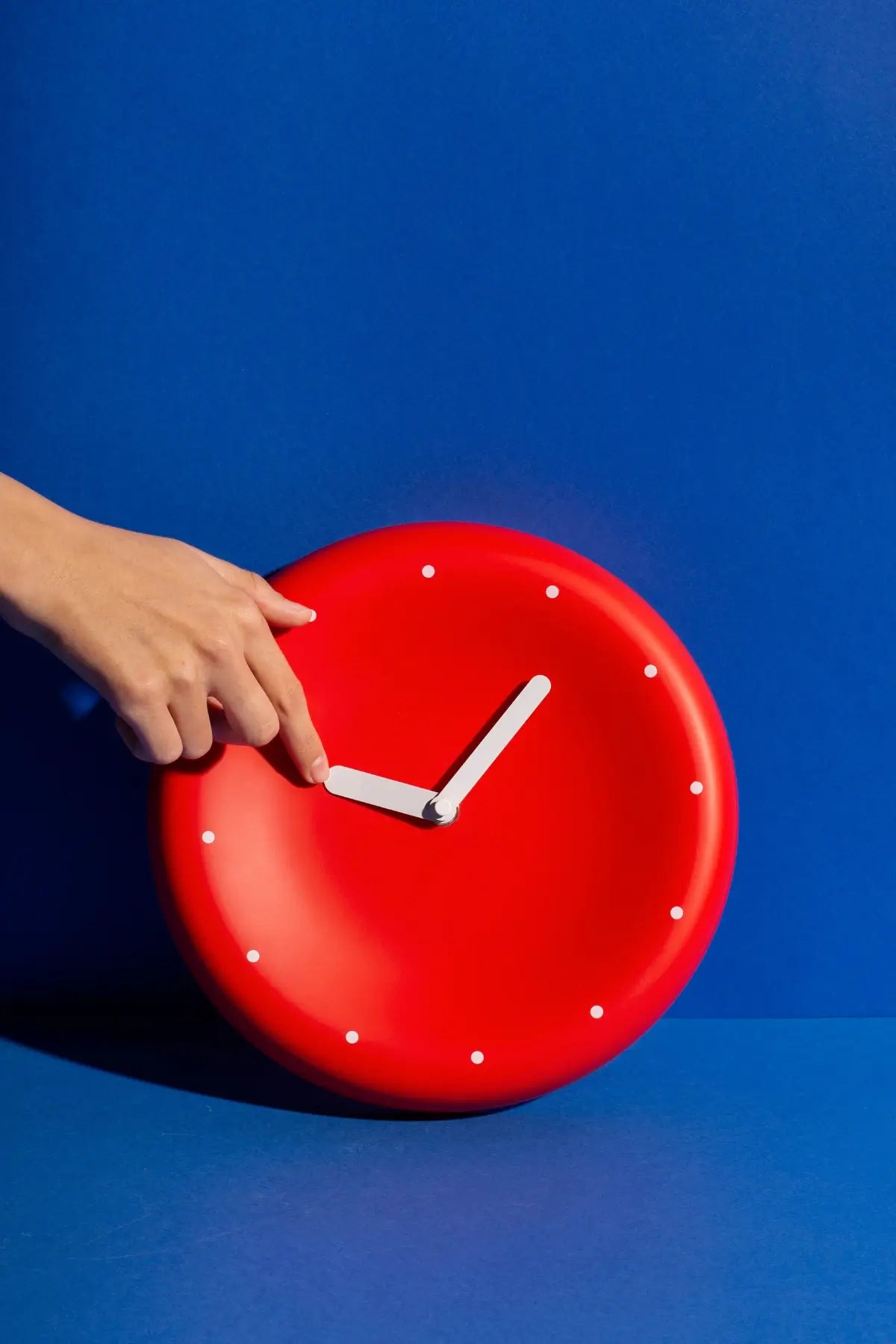
If you like the idea of a clock that reads as sculpture first, our Abstract Wall Clock follows the same instinct — a distorted, artistic silhouette designed to hold its own as wall decor, with a silent quartz movement so the piece stays purely visual, never ticking for attention.
The Bottom Line
The Ball Clock is proof that the most radical thing you can do to a familiar object is sometimes just to ask what part of it people actually use — and delete everything else. Nearly eighty years on, nobody has needed to add the numbers back.


Share:
The Adnet Mirror: A Saddle-Maker's Trick That Became a Design Icon
The PH Artichoke: A Lamp With 72 Leaves and Not One Visible Bulb