


The Flowerpot Lamp: Verner Panton's Answer to Beige Danish Design
Read moreabout The Flowerpot Lamp: Verner Panton's Answer to Beige Danish Design

The Bialetti Moka Express: A Coffee Pot Modeled on a Washing Machine
Read moreabout The Bialetti Moka Express: A Coffee Pot Modeled on a Washing Machine

The PH Artichoke: A Lamp With 72 Leaves and Not One Visible Bulb
Read moreabout The PH Artichoke: A Lamp With 72 Leaves and Not One Visible Bulb

The Nelson Ball Clock: The Wall Clock That Deleted the Numbers
In 1947, George Nelson's studio was asked to design a collection of clocks. Their conclusion: nobody actually reads the numbers on a clock face — they just judge the angle between the hands. The result was the Ball Clock, twelve painted wood spheres on radiating brass spokes, with no numerals at all. Almost eighty years later, it's still one of the most recognized objects in design.
Read moreabout The Nelson Ball Clock: The Wall Clock That Deleted the Numbers

The Adnet Mirror: A Saddle-Maker's Trick That Became a Design Icon
In 1950, French designer Jacques Adnet wrapped a plain circular mirror frame in stitched leather and brass — borrowing a material language from saddlery and equestrian goods rather than furniture. Seventy-plus years later, the Adnet Circulaire mirror is still made almost exactly the same way. A look at why one small material substitution turned an ordinary mirror into a design icon.
Read moreabout The Adnet Mirror: A Saddle-Maker's Trick That Became a Design Icon
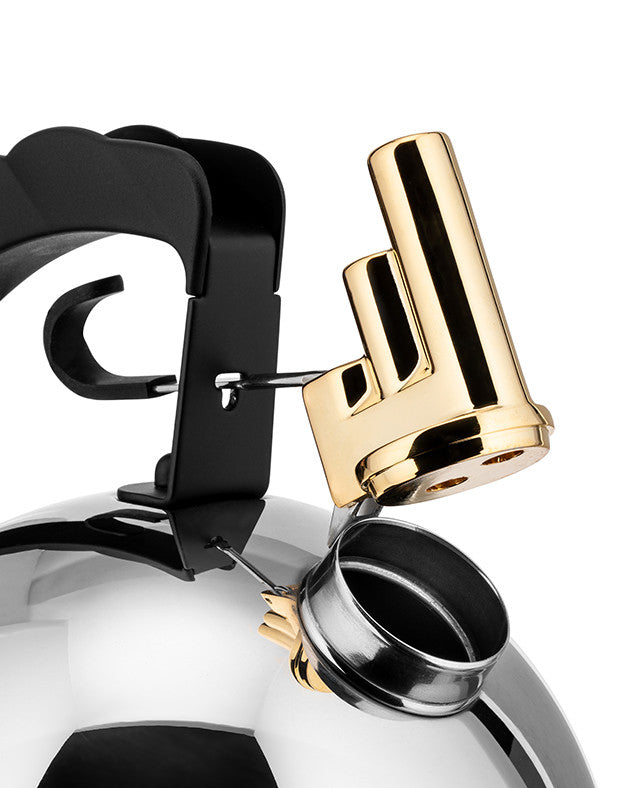
Alessi's 9091 Kettle Doesn't Whistle. It Sings a Chord.
When Richard Sapper designed a kettle for Alessi in 1983, he decided the actual problem worth solving wasn't the shape — it was the whistle. He traveled to Germany to find craftsmen who could tune a brass whistle to two specific musical notes, inspired by boat sirens he remembered from childhood on the Rhine. The result, the 9091, has been in continuous production for over 40 years.
Read moreabout Alessi's 9091 Kettle Doesn't Whistle. It Sings a Chord.
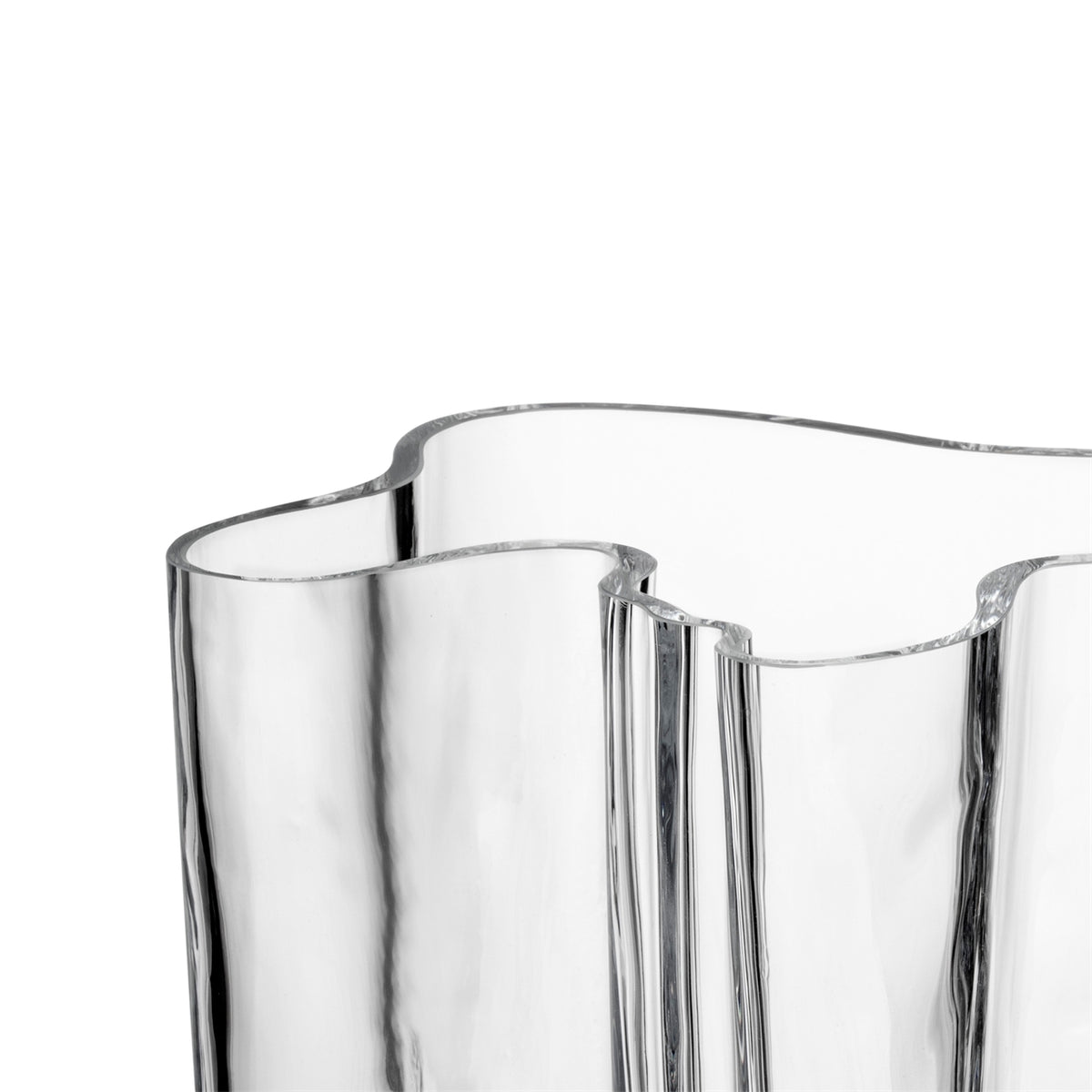
The Aalto Vase: A Piece of Glass Shaped Like a Finnish Lake
Alvar and Aino Aalto's 1936 vase for Iittala has no straight lines and no obvious front or back — every edge is a free-flowing curve, still mouth-blown by hand nearly ninety years later. A look at why a vase modeled on a lake shoreline became one of the most recognizable pieces of glass in design, and what asymmetry can do for a room that a straight line can't.
Read moreabout The Aalto Vase: A Piece of Glass Shaped Like a Finnish Lake
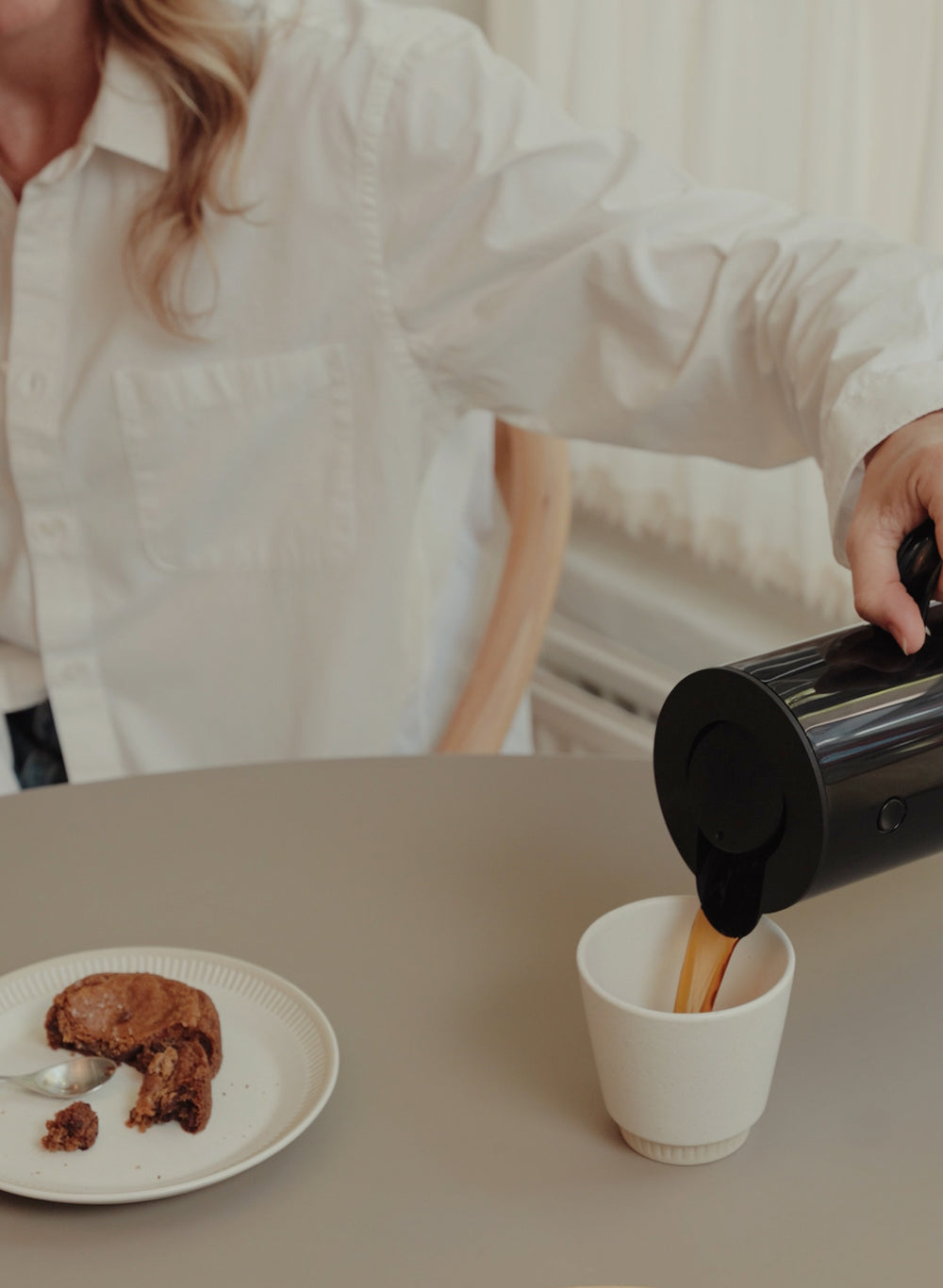
The Stelton EM77: A Thermos Redesigned Because of a Sailboat
In 1977, Erik Magnussen was asked to design a follow-up to Arne Jacobsen's Cylinda-Line. His EM77 vacuum jug solved a problem every thermos of the era had — a stopper you had to unscrew and put down somewhere — with a self-tipping lid he figured out by watching a gimballed instrument on his sailboat. Almost 50 years and 100+ colors later, it's still in production.
Read moreabout The Stelton EM77: A Thermos Redesigned Because of a Sailboat
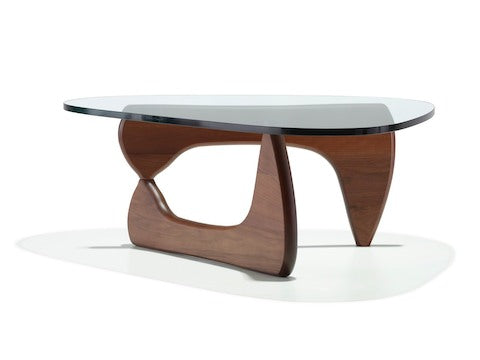
The Noguchi Table: Born From a Grudge, Now the Most Copied Table in Design
The Isamu Noguchi table — curved wood base, glass top — wasn't born from a design brief. It was born from a grudge, after a rival designer copied Noguchi's early model and dismissed it as something "anybody could make." Nearly 80 years later, it's one of the most imitated tables ever produced. A look at why, and what its sculpture-first approach to furniture teaches about choosing a coffee table.
Read moreabout The Noguchi Table: Born From a Grudge, Now the Most Copied Table in Design