

The Detail Everyone Else Ignored
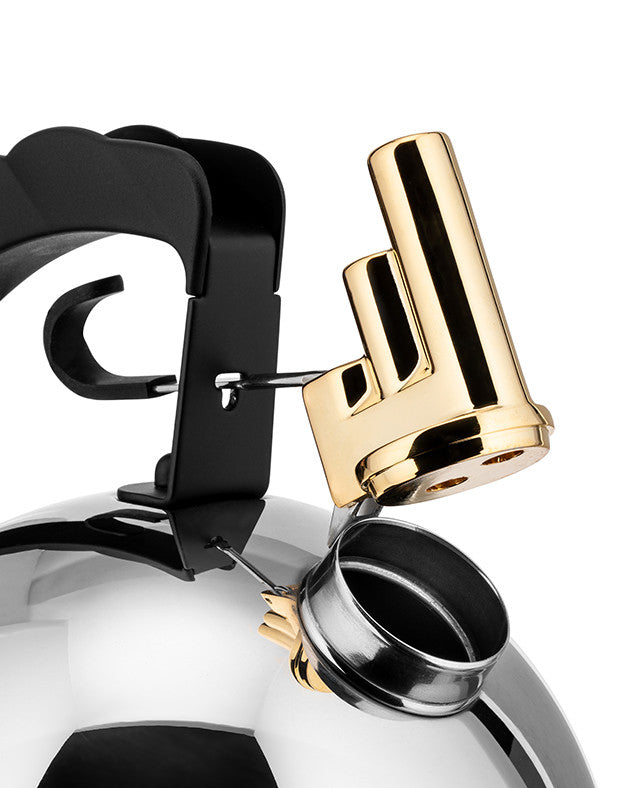
Every kettle before 1983 solved the same problem the same way: a shrill, single-pitch whistle designed to be heard, not enjoyed. When Richard Sapper designed the 9091 for Alessi, he looked at that whistle and decided it was the one part of the object nobody had actually tried to make good.
Sapper's reference point wasn't other kettles. It was a childhood memory of boat sirens on the River Rhine — a sound built to be heard across water without being unpleasant. He wanted his kettle to announce boiling water the same way: audible, unmistakable, but not anxious.
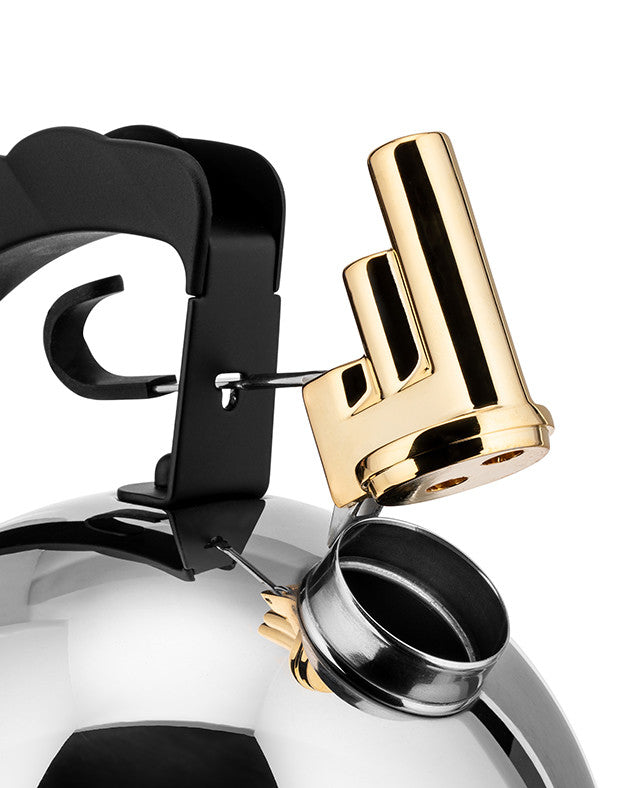
Photo: Alessi — official product page
Tuning a Kettle Like an Instrument
To get there, Sapper went back to Germany and tracked down craftsmen capable of producing small brass whistles with a genuinely low, controlled timbre — not the thin shriek most kettles produce. The final mechanism uses two small vents tuned to specific musical notes, so steam escaping the spout doesn't just make noise, it plays a soft two-note chord.
It's an enormous amount of engineering and craft dedicated to a part of the kettle most designers would consider finished the moment it made a sound at all.
Why That Level of Care Made It an Icon
The 9091 became the first in a run of Alessi kettles built around a single idea: a kitchen object doesn't have to interrupt your day to do its job. Original sketches from 1983 show Sapper treating the whistle mechanism with the same seriousness as the kettle's silhouette — not a functional add-on, but the actual center of the design. Over 40 years later, it's still in production essentially unchanged, because the problem it solved never stopped mattering.
What This Teaches About Buying Objects for Daily Rituals
Most kitchen tools are judged on whether they work. The 9091 is a reminder that the objects worth keeping for decades are judged on something narrower: whether the moment of using them is actually pleasant.
- Interrogate the part everyone else treats as "good enough." The overlooked detail is usually where the real design opportunity is hiding.
- Sound and texture matter as much as silhouette. An object you use daily is experienced with more than your eyes.
- Genuinely solved problems don't need re-solving. That's why this kettle hasn't meaningfully changed in over four decades.
If you like objects that turn a small daily ritual into something worth noticing, our UNDULA Ripple Elegance Vase works from a similar instinct — a stacked, rippled silhouette designed to catch light differently throughout the day, so a static object never quite looks the same twice.
The Bottom Line
Most designers would have called a kettle finished the moment it boiled water and made a noise to announce it. Richard Sapper kept going until the noise was something you'd actually want to hear — and that stubbornness is the entire reason the 9091 is still on shelves, and in kitchens, more than forty years later.


Share:
The Aalto Vase: A Piece of Glass Shaped Like a Finnish Lake
The Adnet Mirror: A Saddle-Maker's Trick That Became a Design Icon