

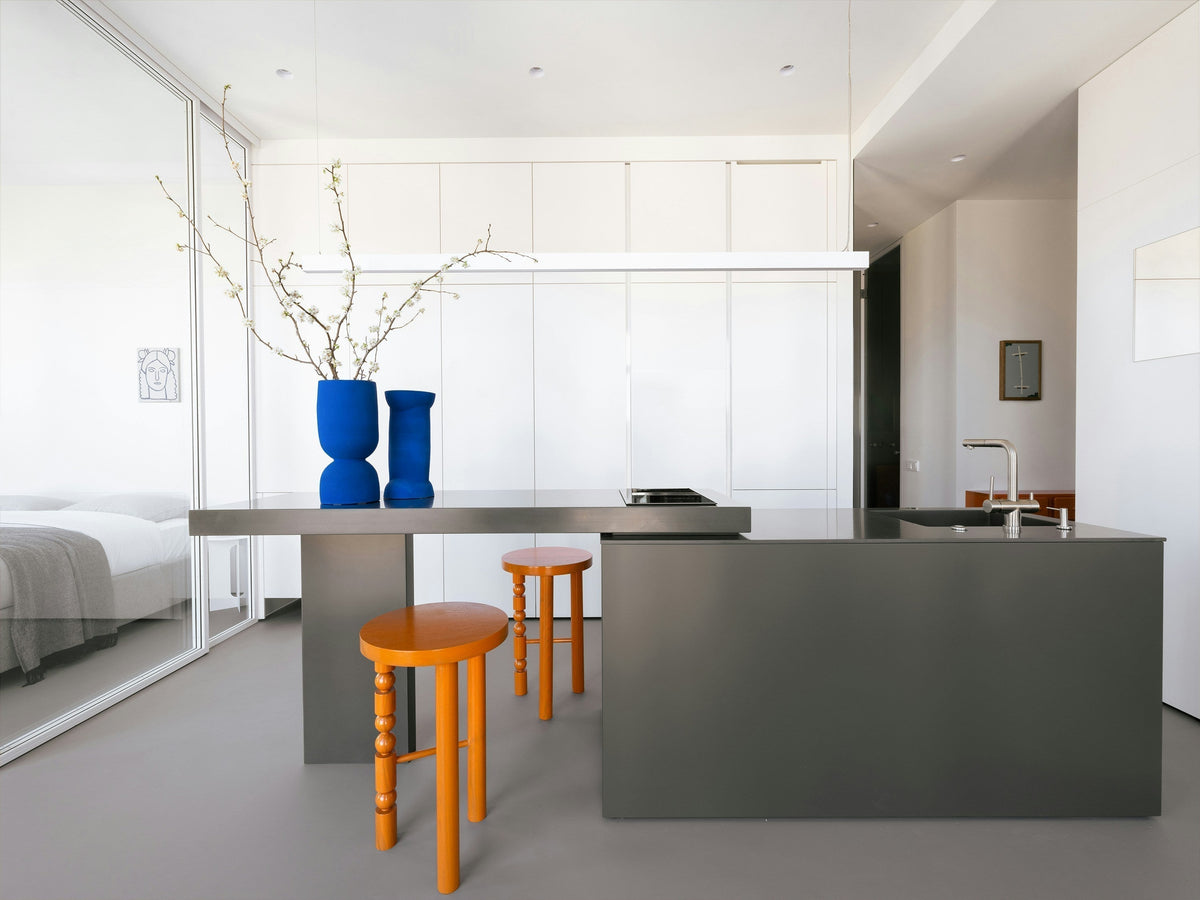
Not a vibe. Not "if it doesn't spark joy." An actual number, calculated from your square footage, who lives there, and how you use the space — run below, in under 3 minutes.
Every popular decluttering rule gives you a method. None of them give you a target.
"Spark joy" doesn't tell you when to stop. The 12-12-12 challenge tells you what to remove today, not what your home should hold long-term. One-In-One-Out only works once you already know your ceiling. They're all process, no destination.
A 400 sq ft studio and a 2,400 sq ft family house don't need the same decluttering method — they need different numbers. That's the gap most minimalism advice skips.
| Method | Core Rule | What It Doesn't Tell You |
|---|---|---|
| KonMari | Keep what "sparks joy" | No stopping point — joy is subjective and doesn't scale to square footage |
| 12-12-12 Challenge | Find 12 to donate, 12 to trash, 12 to return to place | One-time cleanup, not an ongoing target for how much to own |
| 100 Thing Challenge | Own 100 personal items total | Arbitrary flat number — ignores household size and space entirely |
| One-In-One-Out | New item in, old item out | Keeps your current count flat — doesn't tell you if that count is right |
| Object Capacity (below) | Calculated from space, household, and habits | A specific number, recalculated any time your situation changes |
Five inputs, one output.
Object capacity isn't guesswork — it's your usable square footage adjusted for how many people live there, how you work, and how you actually behave around your things.
Your object capacity, calculated.
Six questions. No email required to see your result.
How big is your home?
Who lives here?
Where do you work?
How does your home feel right now?
Most of your objects are used…
What do you want most from your space?
A number without action is trivia. Here's the action.
- Count what you have. Pick one room. Count visible objects. Compare to your capacity, scaled to that room.
- Cut in order of ease, not sentiment. Duplicates first, unused-in-90-days second, sentimental objects last.
- Apply One-In-One-Out from today forward. Your capacity is a ceiling, not a one-time cleanup target.
- Recalculate when life changes. New apartment, new roommate, new job — the number moves. Run it again.
The full Essential System adds a room-by-room action plan, category-specific quotas (clothing, kitchen, books, tech), a keep-or-remove Decision Engine for any object, and an AI room analyzer that scores visual clutter from a photo — all calibrated to the number above.
Open the full system →How many things should I own?
Is there a formula for how much stuff is too much?
Does minimalism mean owning almost nothing?
How often should I recalculate my object capacity?
Know your number. Then style around it — starting with one object that earns its place.


Share:
Geometric Sphere Bookend | Modern Acrylic & Steel Book Holder
Artemide Sintesi at 50: The Lamp That Folds Flat and Still Feels Radical