


I didn't buy the Kubus 4 for the candle.
I bought it because a friend had one sitting on her windowsill, and every time I visited, I found myself staring at it instead of talking to her. A small brass cube, open on one side, holding a single taper. Nothing about it should have held my attention that long.
But it did. Every time.
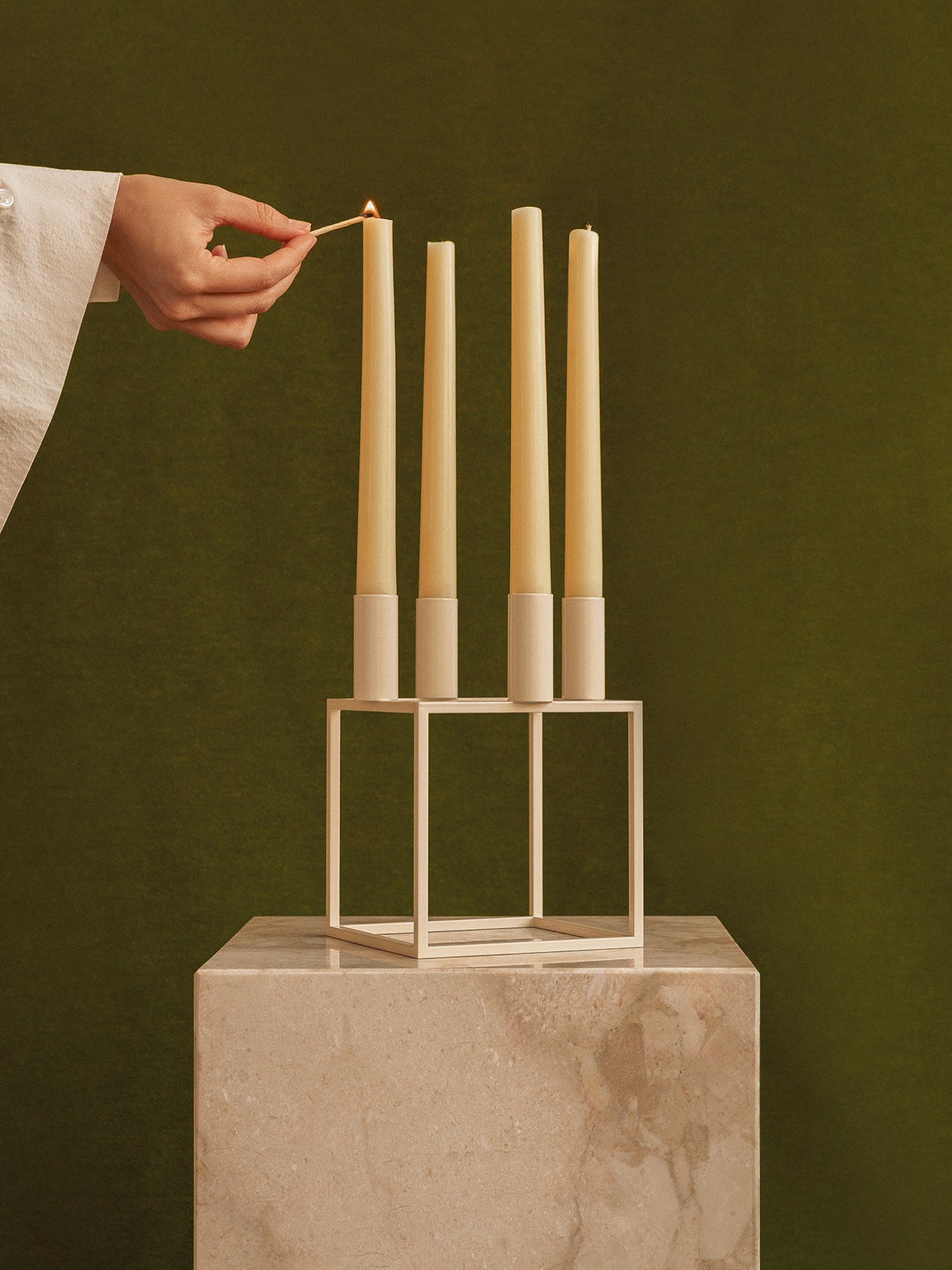
It took me a while to learn the story behind it. Mogens Lassen designed it in 1962, apparently after a trip that included Le Corbusier's Villa Savoye — all those clean, stacked volumes stuck with him. He built the Kubus as a kind of miniature architecture. A cube within a cube. Open on one face so the candle could breathe, closed on the rest so the form stayed intact.
It wasn't manufactured for decades. Sat in a drawer, more or less, until his family eventually put it into production long after he'd designed it.
When mine arrived, I put it on my desk without thinking much about placement. That was the first mistake.
During the day, it just sat there — a small metal box, mildly interesting, easy to walk past.
At night, with the candle lit, everything changed.
The open face throws a square of light against whatever's behind it. Not a glow. A shape. A hard-edged rectangle of gold on the wall, shifting slightly as the flame moves. I hadn't expected a candle holder to project anything. I assumed the light stayed inside the object.
It doesn't. It escapes in exactly the shape of the thing that's holding it.
I started noticing shadow more after that. Not just from the Kubus — from everything. The way a lampshade edits light before it hits a wall. The way a window frame turns sunlight into a grid on the floor by 4pm. Objects don't just occupy space. They shape what happens to the light around them, and most of the time we don't clock it.
The Kubus made that obvious in a way nothing else in my apartment had.
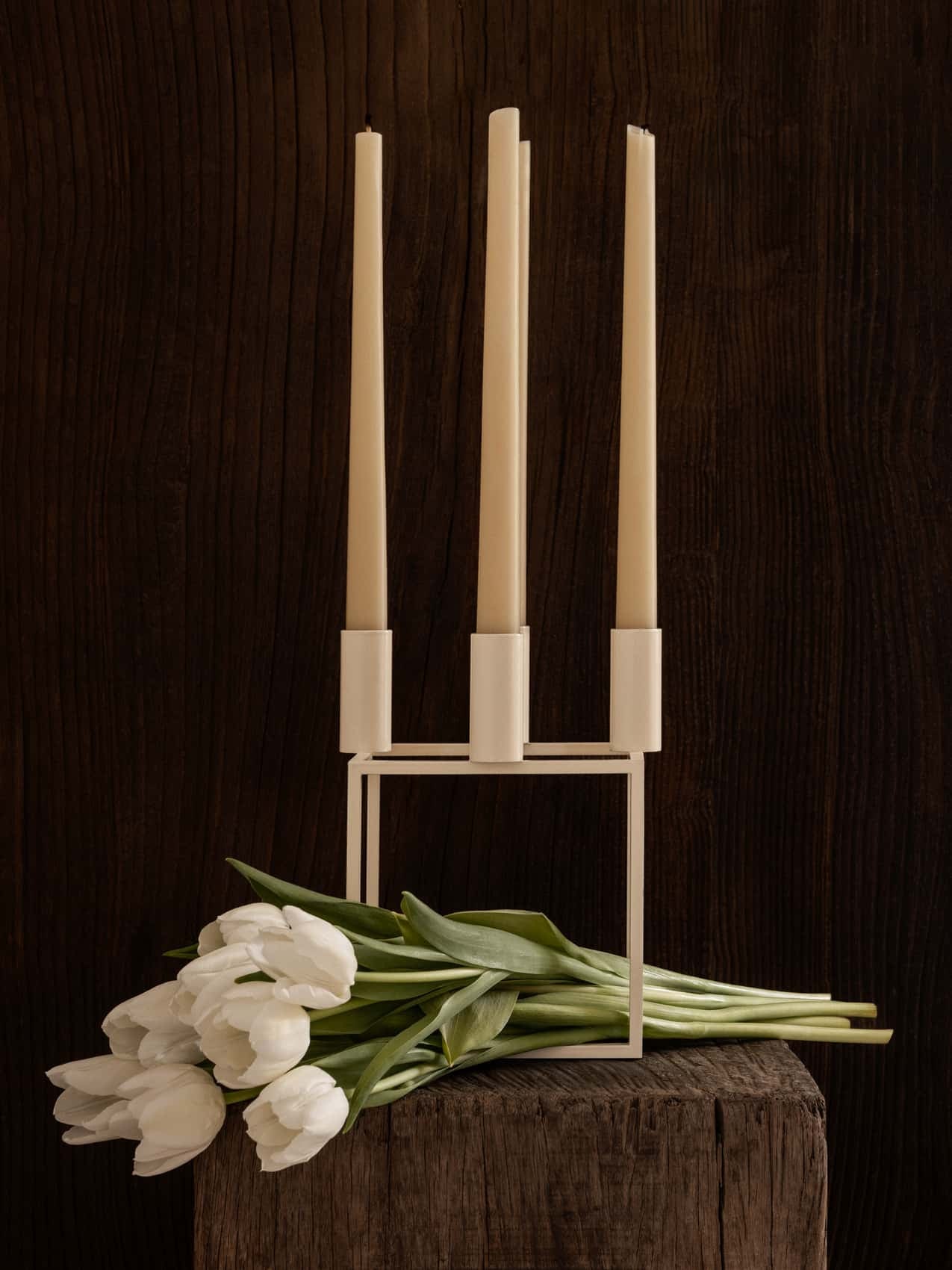
It's a small object, physically. You could hold it in one hand. But it doesn't behave like a small object once the candle's going. It throws a presence well past its own footprint.
There are limits to it, of course. It only really does its job with the lights off, or close to it — in a bright room, the shadow washes out and you're left with a nice-looking brass cube and nothing more. It also needs a wall or surface nearby to actually catch the light; floating in the middle of a room, it loses the trick entirely.
And it's not forgiving about candle size. Too thick a taper and it won't sit right in the opening. I learned that one the hard way, with wax on the desk to prove it.
So who is this for?
Not someone who wants a candle holder and nothing more. There are simpler, cheaper ways to hold a candle upright.
It's for someone who's curious about what an object does after dark, not just how it looks in daylight photos. Someone willing to turn the lights off and actually watch what happens.
Would I recommend it?
Yes — but only if you're willing to sit with it for a few nights before deciding. The first time you light it, it's just a candle in a box. It's the fifth or sixth time, once you start anticipating the shadow before it appears, that it actually becomes worth owning.



Share:
The Flowerpot Lamp: Verner Panton's Answer to Beige Danish Design
A Vase With One Flaw I Refuse to Fix