

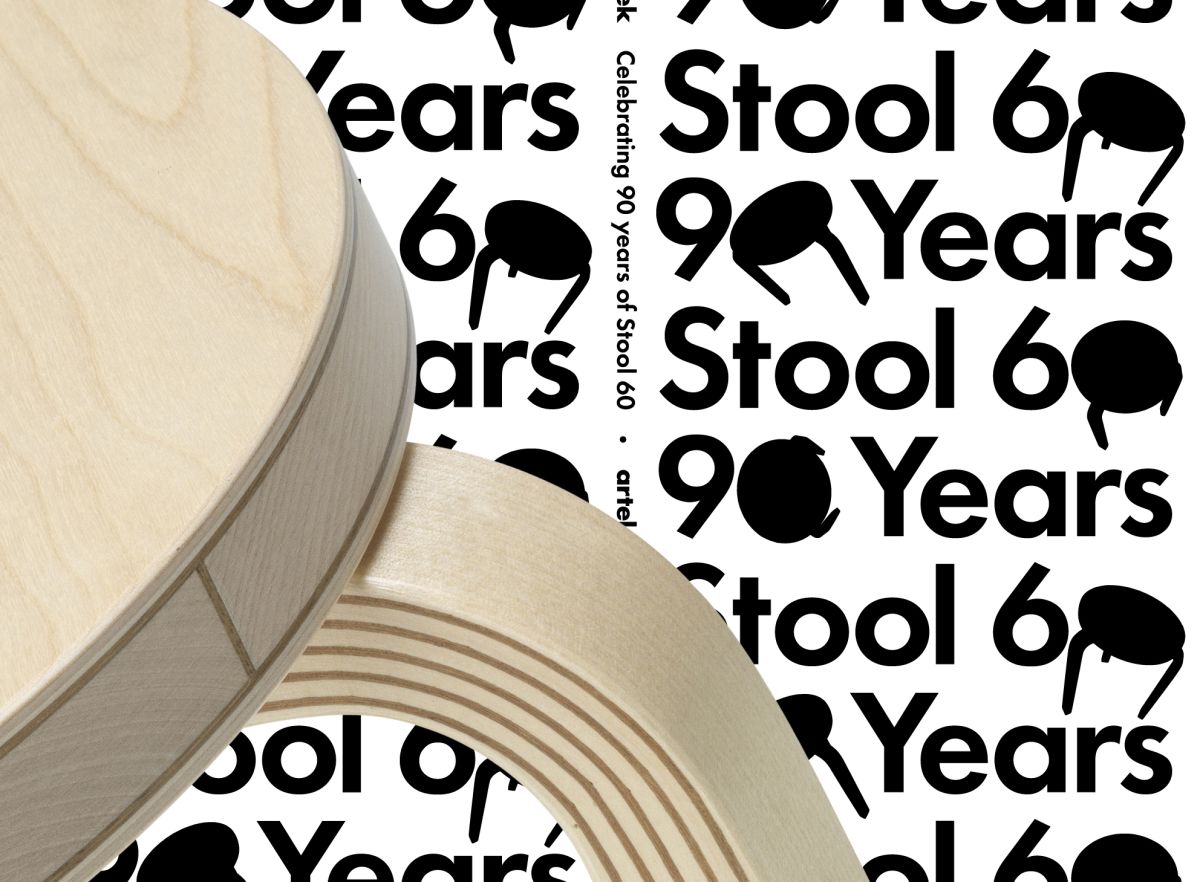
The Stool That Got It Right the First Time
Most furniture gets redesigned every few years — new proportions, new materials, a "refreshed" silhouette to justify a new season. The Stool 60, designed by Alvar Aalto for Artek in 1933, has done the opposite. Ninety-plus years later, it's still in continuous production, still made the same way, and Artek's own anniversary campaign calls it exactly what it is: "a companion for life."
That's not marketing restraint. It's confidence that the original design solved the problem completely enough that touching it again would only make it worse.

Photo: Artek — official design journal
The Invention Hiding in Plain Sight: the L-Leg
The reason Stool 60 could exist at all comes down to one technical breakthrough. Working with joiner Otto Korhonen, Aalto patented what's now called the L-leg in 1933: solid birch, sawn at the end into thin fan-like layers, then steam-bent and glued back into a single L-shaped joint strong enough to hold a leg to a seat without brackets, screws, or a single visible fastener.
Before this, joining a round leg to a flat seat at a clean right angle required either heavy joinery or a compromise in the silhouette. Aalto's bent-wood joint let the leg attach as if it were grown that way — which is exactly why the stool still looks inevitable rather than assembled.
One Object, an Absurd Number of Jobs
Part of why Stool 60 never needed reinventing is that it was never really just a stool. Artek's own material describes it moving "effortlessly between all spheres of your home" — and in practice, owners have used it as:
- A seat for working, studying, or dining
- A bedside or occasional table
- A plant stand
- Extra storage for books, or a display stand for a favorite object
- Stacked seating — the three-legged form nests into a spiral tower, so a stack of five takes up the floor space of one
A chair with arms and a back can really only be a chair. A stool this reduced can be almost anything, which is a large part of why it has survived nearly a century of changing interiors without becoming irrelevant to any of them.
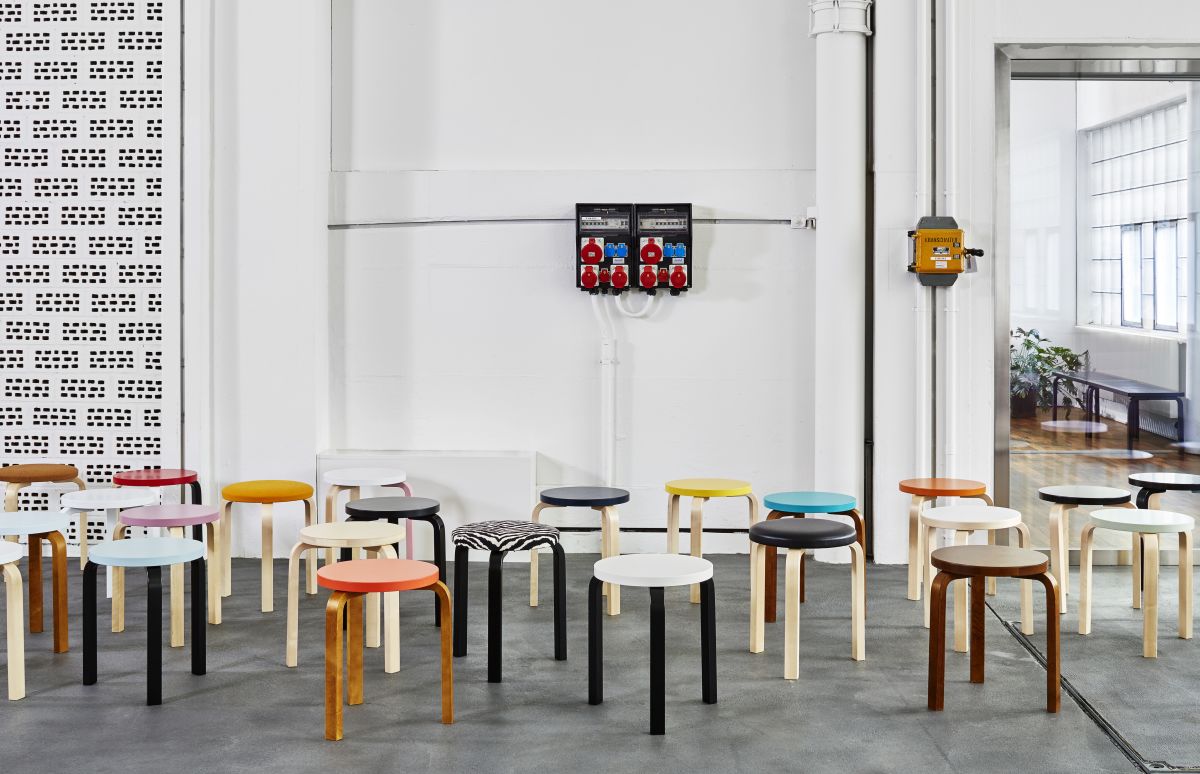
Photo: Artek — official design journal
Why "Barely Changed" Is the Whole Point
Artek has released anniversary editions — Kontrasti, Loimu, a Formafantasma collaboration called Villi — but notice what those editions actually change: finish, color, surface treatment. Not the leg. Not the joint. Not the proportions.
That restraint is the design lesson worth borrowing, whatever your budget: when a form is already reduced to its essential mechanism, the only thing left to vary responsibly is surface — never the logic underneath it.
What This Means for Buying Wood Furniture That Lasts
You don't need a museum-piece budget to apply the same standard when choosing stools and seating for your own home. The questions Stool 60 answers well are the ones worth asking of anything you buy:
- Is the joinery honest? A leg that's bent, notched, or joined as part of the wood's own structure will always outlast one that depends on a screw or bracket.
- Does it do more than one job? Seating that can double as a side table or plant stand earns its footprint twice over.
- Does it stack or nest? Small-space furniture should shrink when you're not using it.
Our own Vintage Cross-Leg Stool is built on the same brief — solid birch marine board, a compact 16x18" footprint, and a crossed-leg joint honest enough to double as a bedside table, footrest, or plant stand when it isn't holding a person.
The Bottom Line
Stool 60 isn't a design icon because Artek kept it around out of nostalgia. It's an icon because, ninety-plus years on, nobody has found a genuinely better way to solve the same three problems: join a leg to a seat without hardware, make the result stackable, and make it useful for more than sitting.
Until someone does, refusing to redesign it isn't laziness. It's the correct decision.



Share:
Artemide Sintesi at 50: The Lamp That Folds Flat and Still Feels Radical
The Noguchi Table: Born From a Grudge, Now the Most Copied Table in Design